
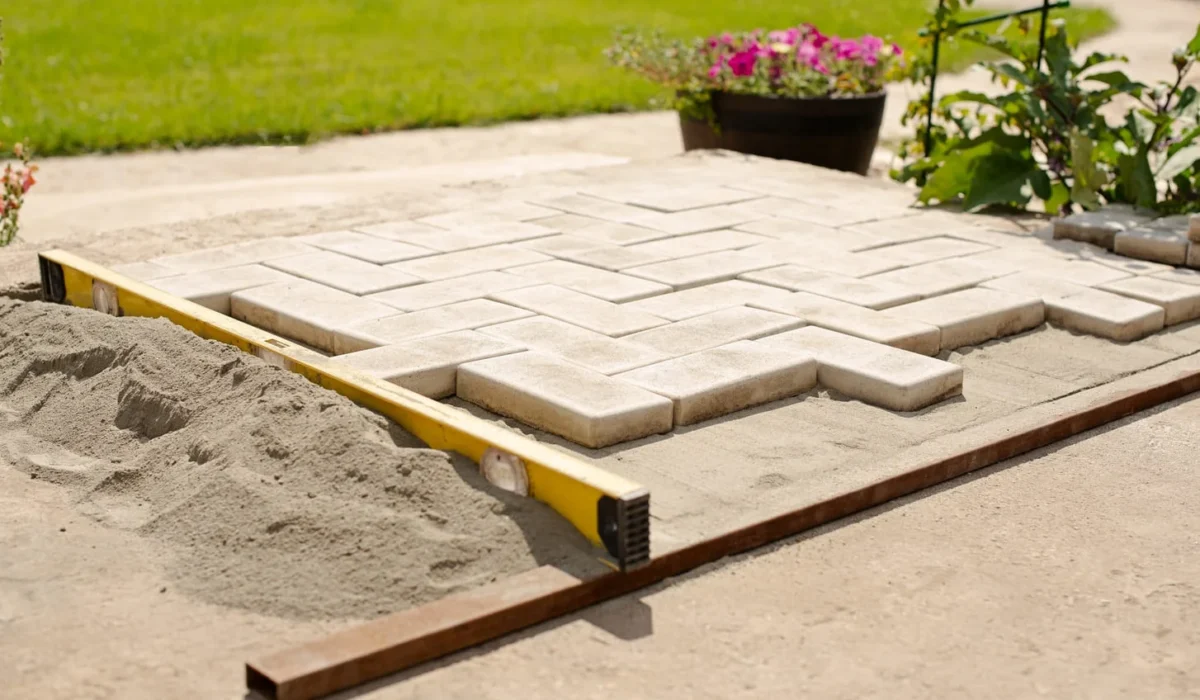
Common Paver Patio Mistakes and How to Avoid Them
A paver patio can completely change the way you use your backyard.
It can create a comfortable place for outdoor dining, give your fire pit a defined gathering area, connect your home to a pool or garden, or simply turn an underused section of your property into a functional outdoor living space.
But a beautiful paver patio is not created by choosing attractive pavers alone.
The installation underneath those pavers matters just as much as the finished surface.
Poor drainage, inadequate base preparation, improper slope, weak edging, incorrect compaction, and rushed installation can cause problems that may not appear immediately. Months or even years later, the patio may begin to settle, shift, develop gaps, collect water, or become uneven.
That is why understanding the common paver patio mistakes homeowners make can help you make better decisions before construction begins.
Whether you are planning a small backyard patio in North Carolina or a larger outdoor living project around the Charlotte and Lake Norman area, the same principle applies:
A durable patio starts below the surface.
If you are considering a new paver patio, getting the installation details right from the beginning can save you from expensive repairs later.
Ready to transform your backyard? Request a professional paver patio estimate and discuss your design, materials, drainage, and installation options with a local hardscaping professional.
Why Paver Patio Installation Requires More Than Good-Looking Materials
One of the biggest misconceptions about paver patios is that the pavers themselves are the most important part of the project.
They are important—but they are only the visible part.
Underneath the pavers is a carefully prepared system designed to support the finished surface.
A typical installation may involve:
- Excavation
- Proper grading
- A compacted aggregate base
- Bedding material
- Pavers
- Edge restraints
- Joint material
- Proper drainage considerations
If one of these components is installed incorrectly, the entire patio can be affected.
Think of the pavers as the finished floor of an outdoor room.
You would not build an indoor floor over an unstable foundation and expect it to remain perfectly level for years.
The same concept applies outdoors.
A professional installation focuses on what you can see and what you cannot see.
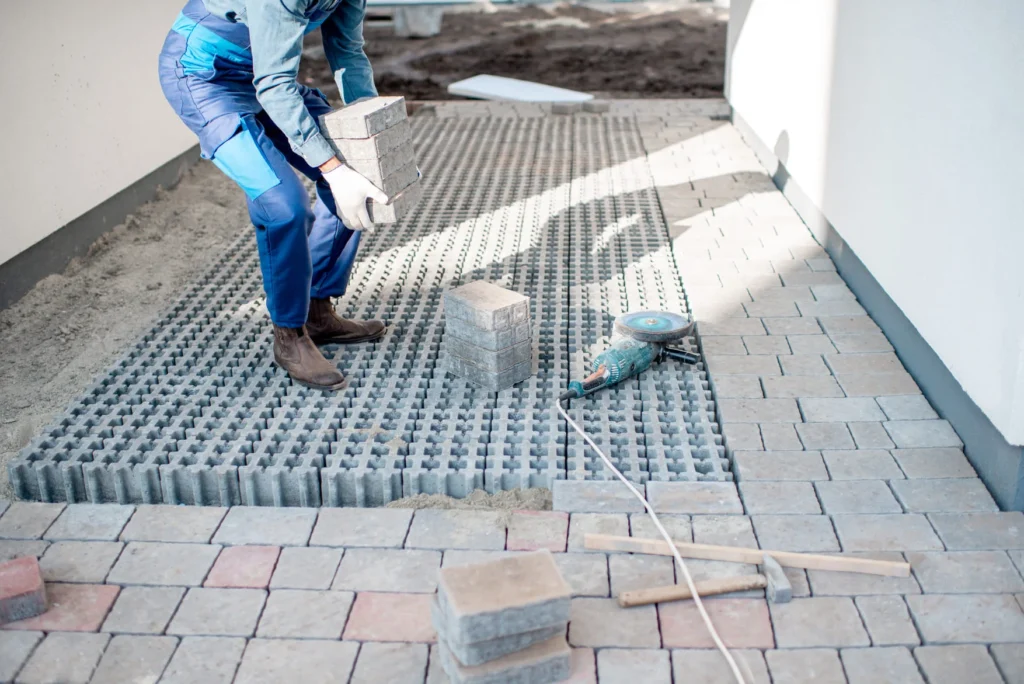
Mistake #1: Skipping Proper Site Preparation
One of the most serious paver patio installation mistakes is failing to prepare the site correctly.
It can be tempting to remove a small amount of soil, level the area, add some sand, and start laying pavers.
That approach may produce a patio that looks good immediately after installation.
The problem is what happens afterward.
Soil moves.
Water moves through the ground.
Freeze-thaw cycles can affect certain regions.
Heavy rain can saturate poorly prepared areas.
And repeated foot traffic places pressure on the finished surface.
If the underlying soil and base are not properly prepared, the patio may eventually settle unevenly.
What proper preparation involves
The exact process depends on the site, soil, drainage, and project design.
However, professional preparation typically considers:
- Existing soil conditions
- Required excavation depth
- Drainage
- Elevation
- Compaction
- Base thickness
- Finished patio height
- Connection to existing structures
The goal is to create a stable foundation before the first paver is installed.
If you are planning a patio project, ask your contractor how the site will be prepared—not just which pavers will be installed.
Mistake #2: Ignoring Drainage
Water is one of the biggest threats to poorly designed outdoor hardscapes.
A patio that does not drain properly can develop standing water, erosion, soil movement, and other problems.
This is especially important in areas of North Carolina where heavy rainfall can occur during storms.
A patio should not simply be made “level.”
It needs to be designed with appropriate drainage and grading.
Why patio drainage matters
Imagine spending thousands of dollars on a beautiful paver patio only to discover that rainwater collects next to your back door.
Or imagine water consistently flowing toward your home’s foundation.
These are not cosmetic problems.
They can become property-maintenance issues.
Proper grading directs water away from areas where it could cause damage.
Depending on the property, drainage solutions may also involve:
- Grading
- Swales
- Channel drains
- Catch basins
- Drainage pipe
- Permeable paver systems
- Proper surface slope
The appropriate solution depends on the site.
A good patio should work with the property
Rather than trying to force water where it does not naturally belong, a professional hardscape design considers how water already moves across the property.
This is one reason an experienced site evaluation is so valuable.
Mistake #3: Using the Wrong Base Material
Another common paver patio mistake is using an inadequate base.
The base provides much of the structural support for the patio.
If it is too thin, poorly compacted, or made from inappropriate material, the surface may eventually move.
The right base depends on factors such as:
- Soil conditions
- Patio size
- Expected traffic
- Climate
- Drainage
- Site conditions
- Local installation practices
A professional hardscape contractor should determine the appropriate base system for the project rather than applying the same formula to every property.
Why base preparation affects longevity
Pavers are strong individually.
But a patio is a system.
When properly installed, the base helps distribute loads and provide stability.
When the base is inadequate, individual pavers may begin to settle independently.
That is when homeowners may notice an uneven surface.
If durability is important to you, ask what is underneath the pavers before approving the project.
Mistake #4: Failing to Compact the Base Correctly
Having the right base material is only part of the equation.
It also needs to be properly compacted.
Insufficient compaction can leave voids or unstable areas underneath the patio.
Over time, those areas can settle.
The result may be:
- Low spots
- Uneven pavers
- Depressions
- Cracked or shifted areas
- Water accumulation
Professional installation typically uses appropriate compaction equipment and techniques to create a stable foundation.
This is one of those installation steps that homeowners may never see—but they will notice if it was done incorrectly.
Mistake #5: Installing a Patio Without Proper Edging
Pavers are designed to work as a system.
The individual pieces need to remain contained.
Without adequate edge restraint, the outer pavers can gradually shift outward.
This can create gaps and disrupt the pattern.
Proper edging helps keep the patio contained and maintains the integrity of the installation.
Why edging matters visually
Even a small amount of movement around the perimeter can make an otherwise attractive patio look unfinished.
Strong edging provides both structural and aesthetic benefits.
It helps maintain clean lines and prevents the installation from gradually spreading.
Mistake #6: Choosing Pavers Based Only on Appearance
This is one of the easiest mistakes to make.
You see a beautiful paver color or pattern and immediately picture it in your backyard.
But appearance should not be the only consideration.
You also need to think about:
- Durability
- Intended use
- Surface texture
- Color variation
- Maintenance
- Slip resistance
- Heat exposure
- Traffic
- Compatibility with the home’s architecture
A patio around an outdoor dining area may have different requirements from a walkway or driveway.
Match the material to the purpose
Ask yourself how you will actually use the space.
Will you place outdoor furniture there?
Will children use it?
Will there be a grill?
Will the area connect to a pool?
Will a fire pit be installed?
Will heavy planters sit on the surface?
The answers can influence which materials and design approaches make sense.
Mistake #7: Choosing a Patio Size Without Considering How You Will Use It
A patio can look spacious on a design plan and feel surprisingly small once furniture is added.
This happens frequently when homeowners underestimate the amount of space needed for outdoor living.
For example, a dining table requires room for:
- The table itself
- Chairs
- People moving around the chairs
- Access to the surrounding areas
A fire pit area requires enough space for seating and comfortable movement.
A grilling area needs clearance and practical access.
Design around activities
Instead of asking:
“How large should my patio be?”
Ask:
“What do I want to do on this patio?”
That question produces a much more useful answer.
If you want an outdoor dining area, design for dining.
If you want a fire pit gathering space, design around seating and circulation.
If you want a complete outdoor living area, consider how the patio will connect different zones.
Mistake #8: Forgetting About the Transition Between the House and Patio
The patio should feel connected to the home.
Poor transitions can create awkward steps, drainage problems, or an appearance that makes the patio feel like it was added as an afterthought.
The relationship between the patio and:
- Back doors
- Steps
- Decks
- Walkways
- Landscaping
- Retaining walls
- Outdoor kitchens
- Pools
should be considered during the design phase.
Think beyond the patio itself
A successful hardscape project often integrates several elements.
The paver patio may become the central feature connecting the home to other outdoor areas.
That creates a more cohesive property rather than a standalone slab of hardscape.
Mistake #9: Poor Paver Layout and Pattern Planning
The pattern of your patio affects both appearance and installation efficiency.
Common patterns include:
- Running bond
- Basketweave
- Herringbone
- Modular patterns
- Random or multi-size layouts
Each creates a different visual effect.
But pattern selection should also account for the shape of the patio.
A complicated pattern may create excessive cutting around curves, corners, or irregular edges.
Good design considers the entire space
A professional layout should account for:
- Patio dimensions
- Focal points
- Furniture placement
- Borders
- Curves
- Steps
- Walkways
- Existing structures
The goal is a design that looks intentional rather than forced into the available space.
Mistake #10: Not Planning for Future Landscaping
Your patio does not exist in isolation.
Landscape plants, trees, garden beds, lighting, retaining walls, and other features may eventually surround it.
If these elements are not considered during the initial design, future landscaping can become more complicated.
For example, installing a patio directly against a location where a drainage feature will eventually be needed can create conflicts.
Likewise, planting large trees too close to hardscape areas can create future maintenance concerns.
Think five or ten years ahead
Ask:
- Will I add landscaping later?
- Do I want outdoor lighting?
- Could I install a pergola?
- Will I add an outdoor kitchen?
- Do I want a fire pit?
- Will I eventually add a pool?
- Does the drainage plan allow for future improvements?
Good hardscape design considers not only today’s backyard but how the property may evolve.
Mistake #11: Underestimating North Carolina Weather
Outdoor hardscapes must handle changing weather conditions.
North Carolina properties can experience:
- Heavy rainfall
- Humidity
- Hot summers
- Soil moisture changes
- Occasional freezing temperatures
- Storm events
A patio needs to be designed and installed with local conditions in mind.
This is particularly important when drainage is involved.
A design that works perfectly during a mild week may reveal weaknesses during a major storm.
Local site experience can therefore be valuable when planning a residential hardscape project.
Mistake #12: Treating a Paver Patio as a DIY Project Without Understanding the Process
There are homeowners who successfully install smaller paver projects themselves.
For a simple garden walkway, DIY installation may be realistic.
A larger patio is different.
The project can involve excavation, material removal, base installation, compaction, grading, cutting, layout, edging, and drainage.
And those steps need to work together.
The difficult part is not necessarily placing the pavers.
The difficult part is preparing everything underneath them correctly.
When professional installation makes sense
Consider professional hardscaping when:
- The patio is large
- The site has drainage challenges
- The property has significant slopes
- The patio connects to the home
- Excavation is substantial
- Retaining walls are involved
- You want a complex pattern
- The project includes multiple outdoor living features
Professional installation can reduce the risk of expensive mistakes and save significant time.
What a Professional Paver Patio Service Should Include
A quality paver patio project should be approached as a complete design and construction process.
Depending on the project, professional service may include:
Site evaluation
The property is assessed for access, grade, soil, drainage, existing structures, and design opportunities.
Design and layout
The patio dimensions, shape, pattern, borders, transitions, and intended uses are planned.
Excavation
Existing soil and materials are removed to the appropriate depth.
Base preparation
A suitable aggregate base is installed and compacted.
Drainage planning
The design accounts for water flow and existing site conditions.
Bedding layer
A suitable bedding material is prepared for the pavers.
Paver installation
The selected pavers are installed according to the planned pattern.
Edge restraints
The perimeter is secured to help prevent movement.
Joint finishing
Joint material is installed to help stabilize the pavers and finish the surface.
Final cleanup
The site is cleaned and prepared for use.
The exact process varies by property, but each stage contributes to the finished result.
The Benefits of Professional Paver Patio Installation
A professionally designed and installed patio provides more than a visually attractive surface.
Better use of your backyard
A properly designed patio creates a defined outdoor living area.
Improved curb appeal
Hardscaping can make the entire property feel more organized and intentional.
More entertaining space
A patio gives homeowners a dedicated place for dining, relaxing, grilling, and entertaining.
Long-term durability
Proper preparation reduces the likelihood of premature settling and movement.
Better drainage planning
Professional site evaluation can identify potential water-management problems before construction begins.
Design flexibility
Pavers allow for numerous colors, textures, patterns, borders, and configurations.
Easier future modifications
A thoughtfully designed patio can be integrated with future landscaping and outdoor improvements.
Signs Your Existing Paver Patio Has Installation Problems
If you already have a paver patio, you may be able to identify potential issues before they become major repairs.
Look for:
Sinking pavers
Individual sections that sit noticeably lower than surrounding areas can indicate settlement below the surface.
Standing water
Water that remains on the patio after rainfall may indicate drainage or grading problems.
Separating edges
Gaps developing around the perimeter can indicate movement.
Large or irregular gaps between pavers
This may indicate shifting or loss of joint material.
Uneven surfaces
A patio should provide a stable, comfortable walking surface.
Noticeable dips or raised sections deserve attention.
Recurring problems after repairs
If the same area repeatedly settles after being repaired, the underlying issue may not have been addressed.
A professional evaluation can help determine whether the problem is localized or related to the underlying base or drainage system.
How to Avoid Costly Paver Patio Repairs
The best time to prevent a patio problem is before installation.
That means asking questions early.
Ask about drainage
Where will rainwater go?
Ask about excavation
How deep will the site be prepared?
Ask about the base
What material will be used underneath the pavers?
Ask about compaction
How will the base be compacted?
Ask about edging
How will the perimeter be secured?
Ask about the design
How will the patio connect with the home and existing landscaping?
Ask about the warranty
Understand what is covered and for how long.
A reputable contractor should be comfortable explaining the installation process.
If someone cannot explain what will happen beneath the pavers, that is worth considering before signing a contract.
Paver Patio Cost: Why the Cheapest Quote May Not Be Comparable
Homeowners naturally want to control project costs.
But comparing patio estimates solely by the final number can be misleading.
Two contractors may provide dramatically different prices because they are proposing different levels of preparation.
One quote may include:
- Proper excavation
- A substantial aggregate base
- Professional compaction
- Drainage work
- Quality edging
- Detailed cleanup
Another may involve a much simpler installation.
The finished patio could look similar immediately after construction.
The difference may only become visible later.
Compare the scope, not just the price
When reviewing estimates, ask:
What exactly am I getting for this price?
A detailed estimate makes it easier to compare proposals fairly.
Choosing the Right Hardscaping Professional
Your contractor has a major influence on the outcome.
Look for a professional who can demonstrate experience with paver patios and residential hardscaping.
Review completed projects
Photos can help you understand the quality and design range of previous work.
Ask about similar projects
A contractor experienced with walkways may not have the same experience with large outdoor living spaces.
Discuss drainage before signing
Drainage should be part of the conversation from the beginning.
Ask for a clear scope of work
You should understand what is included.
Evaluate communication
Good communication matters throughout a construction project.
Think about local experience
For homeowners in North Carolina communities such as Mooresville, Huntersville, Cornelius, Davidson, Troutman, Sherrills Ford, and surrounding areas, local experience can be especially valuable.
Local professionals are familiar with regional weather, residential lot conditions, landscaping styles, and common outdoor-living requirements.
Designing a Paver Patio That Adds More Than Square Footage
A patio should solve a problem.
Maybe your backyard does not have a comfortable place to entertain.
Maybe the existing lawn is difficult to maintain.
Maybe you want to create a defined space around a fire pit.
Maybe you need a transition between the house and pool.
Or maybe you simply want your backyard to feel like an extension of your home.
The best paver patio designs start with that purpose.
Consider creating multiple outdoor zones
A larger patio can incorporate different areas for:
- Dining
- Lounging
- Grilling
- Fire pits
- Outdoor kitchens
- Conversation areas
- Walkways
- Garden transitions
This turns a patio into a true outdoor living environment.
Instead of adding a flat surface, you are creating a space your family can actually use.
Why Pavers Are a Popular Choice for Outdoor Living
Pavers offer homeowners significant design flexibility.
They are available in many:
- Shapes
- Sizes
- Textures
- Colors
- Patterns
- Border styles
This makes it possible to create a patio that complements the architectural style of the home.
Pavers can also be incorporated into larger hardscape designs involving walkways, retaining walls, fire pits, outdoor kitchens, and other landscape features.
That flexibility is one reason paver patios remain popular for residential outdoor living projects.
Frequently Asked Questions About Paver Patio Mistakes
What are the most common paver patio mistakes?
The most common mistakes include poor site preparation, inadequate base material, insufficient compaction, improper drainage, weak edge restraints, poor layout planning, and choosing materials without considering how the patio will be used.
Many problems that appear on the surface actually originate underneath the pavers.
How can I avoid common paver patio mistakes?
Start with proper site evaluation and planning.
Make sure drainage, excavation depth, base preparation, compaction, edging, layout, and material selection are addressed before installation begins.
Hiring an experienced hardscaping professional can also reduce the risk of costly installation errors.
Can pavers be installed directly over soil?
Installing pavers directly over untreated soil is generally not an appropriate approach for a permanent patio.
The surface needs proper preparation and a suitable base system designed for the site and intended use.
Why are my patio pavers sinking?
Sinking pavers can result from problems such as inadequate base preparation, poor compaction, unsuitable soil conditions, drainage issues, or erosion below the patio.
The correct repair depends on the underlying cause.
How do I fix uneven pavers?
The solution depends on why the pavers became uneven.
Simply removing and replacing the affected pavers may not solve the problem if the base underneath has settled.
A proper repair may require lifting the affected area, correcting the base, addressing drainage, recompacting, and reinstalling the pavers.
Do paver patios need drainage?
Yes. Proper drainage is an important part of patio design.
The specific drainage solution depends on the property’s slope, soil, existing drainage patterns, patio location, and local conditions.
How long does a paver patio last?
A properly designed and installed paver patio can provide many years of service.
Its longevity depends on installation quality, materials, site conditions, drainage, maintenance, and how the patio is used.
Are paver patios difficult to maintain?
Paver patios are generally manageable to maintain.
Routine maintenance may include sweeping, cleaning, removing weeds, monitoring joint material, and addressing stains or shifting pavers when necessary.
How much does a paver patio cost?
Paver patio costs vary based on size, materials, site conditions, excavation requirements, drainage, design complexity, access, and labor.
The most accurate way to determine the cost is to have the property evaluated and receive a detailed estimate.
Is a paver patio a good choice for a North Carolina backyard?
Paver patios can be an excellent option for North Carolina outdoor living spaces when they are properly designed and installed.
Because local properties can experience significant rainfall and changing weather conditions, drainage and base preparation should be carefully considered.
Don’t Let an Avoidable Installation Mistake Ruin Your Patio
A paver patio is a significant investment in your home.
The right design can give you years of enjoyable outdoor living.
The wrong installation can leave you dealing with uneven pavers, standing water, shifting edges, drainage problems, and expensive repairs.
That is why the most important decisions often happen before the first paver is placed.
Start with the site.
Plan the drainage.
Prepare the base.
Choose materials based on how the space will be used.
Design the layout around your lifestyle.
And work with an experienced hardscaping professional who understands how all of these pieces fit together.
Ready to build a patio you can enjoy for years?
Whether you are planning a simple backyard sitting area or a complete outdoor living space with a fire pit, outdoor kitchen, retaining walls, or connecting walkways, professional planning can make the difference between a patio that simply looks good and one that performs well over time.
Request a paver patio quote today.
You can call, submit a project inquiry, or schedule an on-site consultation to discuss:
- Patio size and layout
- Paver options
- Drainage
- Base preparation
- Design patterns
- Outdoor living features
- Project timeline
- Estimated investment
Your backyard has more potential than an empty patch of grass.
With the right hardscape design and proper installation, it can become one of the most useful and enjoyable areas of your home.